Elon Musks $5 Ride Could Change Los Angeles Real Estate
Tesla’s Cybercab is now carrying paying passengers. Elon Musk calls it “the future of transport.” If self driving rides get a lot cheaper, I think the bigger shakeup may not be Uber. It could be parking, apartments and the cost of living in Los Angeles.
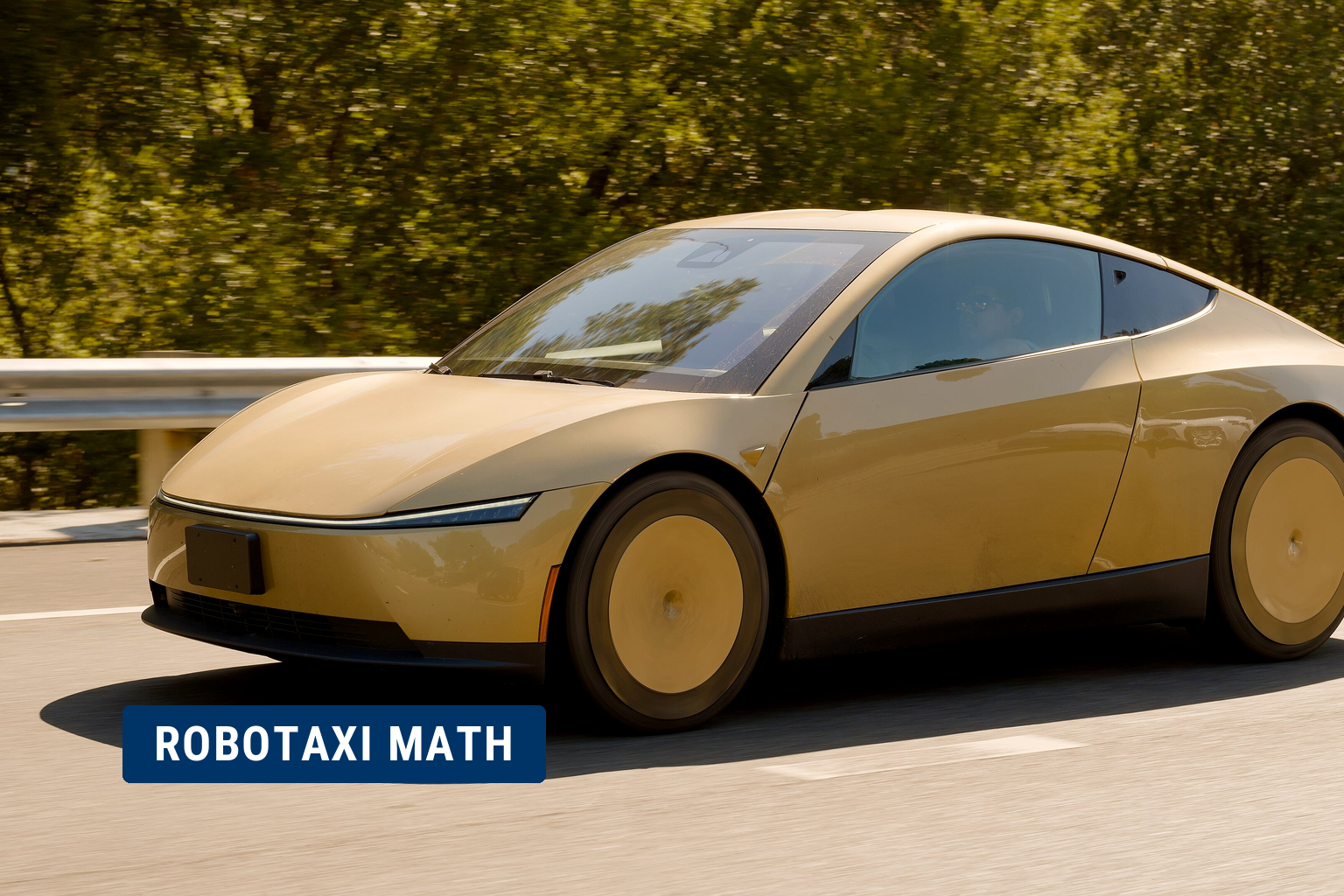
Elon Could Change Los Angeles Real Estate.
Something happened in Austin this week that looks small today.
It may not look small five years from now.
Tesla has started carrying paying passengers in its Cybercab, a car built just for this.
There's no driver.
There's no steering wheel.
There are no pedals.
Customers in Austin can order one through Tesla's Robotaxi app. The rollout is still tiny. Only 45 Cybercabs were registered in Texas at launch. But this is no longer a test car on a closed track.
Elon Musk summed up where he thinks this is going:
“The future of transport.”
In another post, he went further:
“We are indeed entering a literal golden era of transport.”
That sounds like Musk being Musk.
Then I looked at the numbers.
$92 vs. $200
Early Cybercab rider Sawyer Merritt said he spent $92.51 for three hours of Cybercab rides.
His guess for the same trips on Uber:
$200.
Another comparison started going around.
One trip showed:
Cybercab: $19.35
Uber: $34.98
That's about 45% less on that ride.
Dealroom also pointed to a shorter trip: $9.65 for Cybercab versus $21 for Uber with tip.
These are snapshots. They don't prove what Cybercab will cost once it's everywhere.
But to me, they make the money side worth watching.
The question isn't whether Cybercab can beat Uber on one ride.
The question is:
What happens if a $15 uber becomes $5?
We're not there yet.
Take the driver out of the car and you cut one of the biggest costs in ride hailing.
What happens if a $15 ride becomes $10?
Then $7?
Then $5?
At some point Cybercab isn't just competing with Uber.
It's competing with owning a car.
That's when this becomes a Los Angeles real estate story.
The $1,000-a-month car
Think about what a car can cost in Los Angeles.
Maybe:
$300 to $500 a month for the lease or payment.
$150 to $300 for parking.
$150 to $250 for insurance.
$100 to $300 for gas or charging.
Then registration.
Maintenance.
Tires.
Repairs.
That $500 car can become $800 to $1,200 a month.
Now picture self driving rides so cheap that someone spends a small slice of that to get around.
That's more than convenience.
That’s deflation.
Hundreds of dollars a month back in someone's pocket without a raise.
For a renter in Los Angeles, that's real money.
And that's before what it could do for the landlord.
Now think about the apartment building
This is where the story gets bigger.
Parking is expensive to build in Los Angeles.
Underground parking can cost tens of thousands of dollars per space.
Take a 100 unit apartment project.
If underground parking costs about $70,000 per space, 100 spaces means:
$7 MILLION
On places for cars to sit.
That's before land, ramps and drive aisles.
For decades, we've designed apartments around the idea that almost every household needs its own car.
What if that changes?
What if the building has 30 cybercabs?
I've been thinking about this as an apartment owner and developer.
Say I build another 100 unit project in Los Angeles.
Instead of planning around 100 or 150 privately owned cars, what if residents could use 20 or 30 self driving cars?
The tenant comes downstairs.
Opens an app.
A car pulls around.
Work.
Dinner.
The gym.
Whole Foods.
The airport.
When they're done, the car goes to the next resident.
Maybe the building leases the Cybercabs.
Maybe an outside company owns them.
Maybe rides come with the rent.
Maybe the cars serve the public when residents aren't using them and make money for the owner.
I don't know exactly how it would work.
But this caught my attention:
Tesla is already asking people if they want to buy Cybercab fleets and develop “mobility hubs and infrastructure” for its Robotaxi network. Cybercabs aren’t for sale to the public yet. Tesla is clearly thinking about outside companies owning fleets.
An apartment building with its own fleet of cars suddenly doesn't sound crazy.
To be open about it, I asked for a big batch of them on their website as an investment.
The next great apartment amenity may be transportation
Developers spend a lot competing for tenants.
Pools.
Gyms.
Rooftops.
Lounges.
Wi-Fi.
What if one of the best perks becomes:
MOBILITY.
Picture leasing an apartment and hearing:
You don't need a car here. Rides are included.
No $500 car payment.
No $300 parking space.
Less insurance.
No gas.
No charger.
No maintenance.
And maybe $5 or $10 rides when you need more.
That's not just a nicer apartment.
It could lower the tenant's cost of living.
And if the developer can cut millions in parking costs?
Both sides can win.
Then there’s safety
Price isn't Tesla's only claim.
Tesla posted this week:
“Cybercab is engineered to be the safest car on the road.”
That's Tesla's claim. No one outside Tesla has proven it yet.
I want to keep that clear.
Federal regulators have opened an investigation into whether Cybercab meets federal car safety standards, mostly because it has no steering wheel or brake pedals.
Tesla has to prove it's safe with data.
But think about what happens if it does.
If self driving cars become cheaper and safer than cars driven by people, owning a car looks weaker again.
The question changes from:
Would you trust a car without a driver?
To:
Why would you pay more to drive yourself?
This reminds me of chatgpt
When ChatGPT launched, everyone got the first trick.
You typed a question.
The computer answered.
Impressive.
That wasn't the real story.
A few years later, AI is writing software, reading documents, handling customer service, making images, researching businesses and changing how companies run.
The first use was obvious.
The effects that came after were bigger.
Cybercab feels similar.
The obvious reaction today:
Look. The car drives itself.
That may end up being the least interesting part.
The real shakeup starts when cheap self driving rides change everything built around people owning and driving cars.
What happens to Uber?
Parking garages?
Gas stations?
Auto insurance?
Dealerships?
Parking lots?
And for those of us in Los Angeles real estate:
What happens to the apartment building?
Los angeles could be one of the biggest beneficiaries
Los Angeles spent generations building around the car.
That's why I find this so interesting here.
Land is expensive.
Construction is expensive.
Housing is expensive.
Parking is expensive.
Transportation is expensive.
Self driving cars don't fix all of that.
But if they let developers build less parking while giving residents cheaper rides, they hit two costs at once.
Lower building costs.
Lower transportation costs.
That’s powerful.
More of the building can go to what people need:
Housing.
We’re not there yet
There are reasons to be doubtful.
The Cybercab rollout is tiny.
Tesla has made bold self driving predictions before.
Rules and permits are a real issue.
California is not Texas.
Safety still has to be proven.
And nobody knows what Cybercab will cost once thousands, or even millions, of cars are running.
Today Tesla's service is limited. Waymo already runs thousands of self driving cars across many cities.
So I'm not designing my next apartment building around Cybercabs tomorrow.
But something changed this week.
People are paying to ride in them.
The car exists.
The rides exist.
The early prices exist.
And Tesla is already asking operators about fleets and mobility hubs.
That gets my attention.
If self driving rides get a lot cheaper than today's ride hailing, and someday cheaper than owning a car, we have to rethink more than transportation.
We have to rethink cities.
Elon Musk calls it:
“The future of transport.”
He may be right.
But for Los Angeles real estate, I think the bigger story could be what we no longer need to own, and what developers no longer need to build, when that future arrives.
And parking may only be the beginning.