What did Apple see in Culver City?
536,000 feet. Two buildings. Not iPhones.
Four Key Takeaways
1. Apple isn't growing hardware in Los Angeles. It's growing entertainment.
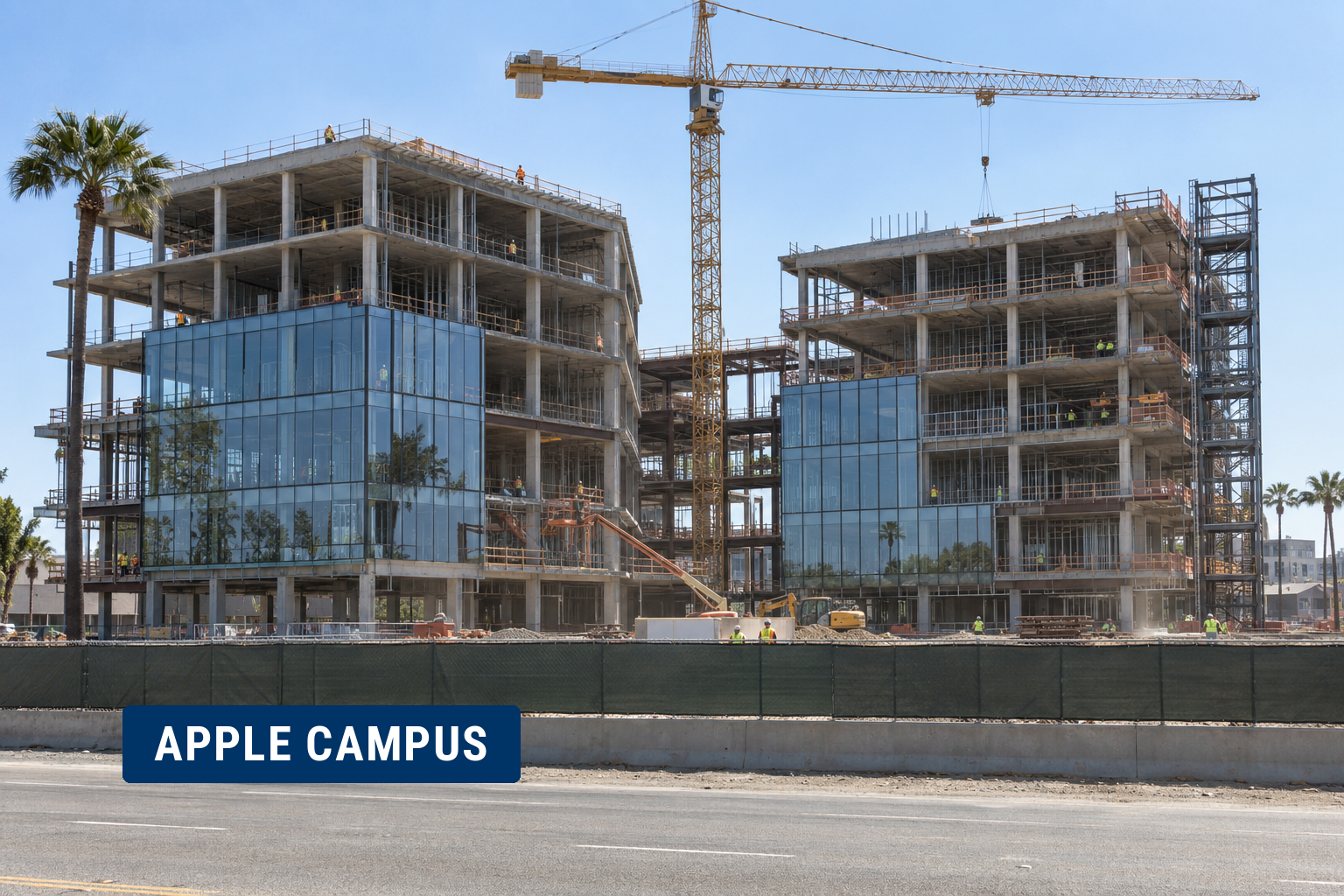
Apple's new 536,000 square foot Culver Crossings campus isn't for making iPhones or designing Macs. It's being built for Apple TV+, Apple Music, software, design, engineering, advertising, legal, and creative teams. To me, that makes Los Angeles one of Apple's most important entertainment and services hubs outside Silicon Valley.
2. Apple didn't randomly pick Culver City.
Within minutes of the new campus are Sony Pictures, Amazon MGM Studios, HBO, Downtown Culver City, the Metro E Line, and a growing cluster of entertainment, media, and tech companies.
Apple picked a spot where creative talent, production companies and tech already meet.
3. Apple is building a whole local economy, not just an office.
Environmental planning documents estimate about 2,144 employees at the new campus. Apple has also said before that it plans to grow its Culver City workforce to more than 3,000 employees over time.
Those employees create demand way beyond office space:
- Apartments
- Restaurants
- Coffee shops
- Hotels
- Retail
- Gyms
- Professional services
- Transportation
4. The real story isn't Apple.
The real story is why global companies keep picking this part of Los Angeles.
When a company like Apple puts hundreds of millions of dollars into a location, it's making a long term call on where talent, new ideas and opportunity will keep growing.
Other investment often follows that call.
The Story
People often call Los Angeles the entertainment capital of the world.
Apple seems to agree.
Quietly, the company is building Culver Crossings, a new 536,000 square foot campus at 8888 Venice Boulevard, on the border of Culver City and the City of Los Angeles.
Add Apple's nearby offices, and the company will control about 664,000 square feet across three buildings in the neighborhood.
This isn't a retail expansion.
It isn't an engineering campus focused on iPhones.
It’s a long term bet on Apple’s fast growing entertainment and services business.
The jobs Apple is hiring for show that plan. Open roles tied to Culver City cover Apple TV, Apple Music, software engineering, video technology, design, marketing, advertising, legal, and other creative jobs. Instead of keeping engineers and creatives apart, Apple is putting them in the same area that already has Sony Pictures, Amazon MGM Studios, HBO, and hundreds of production companies.
I don't think that's a coincidence.
Entertainment has always depended on creative talent.
Today's entertainment also depends on software, artificial intelligence, cloud services, digital delivery, ad tech, and huge content libraries.
Apple's location puts all of those skills within minutes of each other.
As a commercial real estate investor, that's where the story gets more interesting to me.
A campus expected to hold more than 2,100 employees, with long term plans for over 3,000, doesn't just fill office space.
It creates demand for housing.
It supports restaurants and stores.
It brings more demand for hotels, gyms, dry cleaners, parking, and lots of small businesses that serve a growing workforce.
One company's location can reshape a whole neighborhood over time.
The question for me as an investor isn't just whether Apple succeeds.
It’s what happens to the real estate around it when one of the world’s biggest companies commits to a neighborhood for decades instead of years.
Apple's move is also part of a bigger trend.
Instead of leaving Los Angeles, many of the world's biggest tech and media companies keep clustering in a handful of creative districts.
Google expanded into Playa Vista.
Amazon strengthened its Culver City presence.
Netflix continues investing in Hollywood.
Sony remains anchored in Culver City.
Apple has now made one of its largest entertainment real estate commitments in Southern California.
Operator Take
Apple didn't pick this location because it was cheap.
It picked it because being close matters.
The closer Apple is to studios, producers, engineers, designers, marketers and entertainment executives, the easier it is to hire talent and work across industries.
For me as a commercial real estate owner, that's an important reminder.
The most valuable locations are the ones where the next wave of employers wants to be.
One company rarely changes a market on its own.
I’m interested in this area for my current and future investments, and I’m looking to get rent growth here.
In my opinion, this area is set to keep growing, and it’s great for the developers in the area.
Follow Atlas Brief on X