One HVAC Error Took Four Hours to Diagnose. Here's What I Learned.
Modern HVAC systems are becoming more complicated. Apartment owners don't need to become technicians, but understanding the basic components can save time, money and tenant frustration.
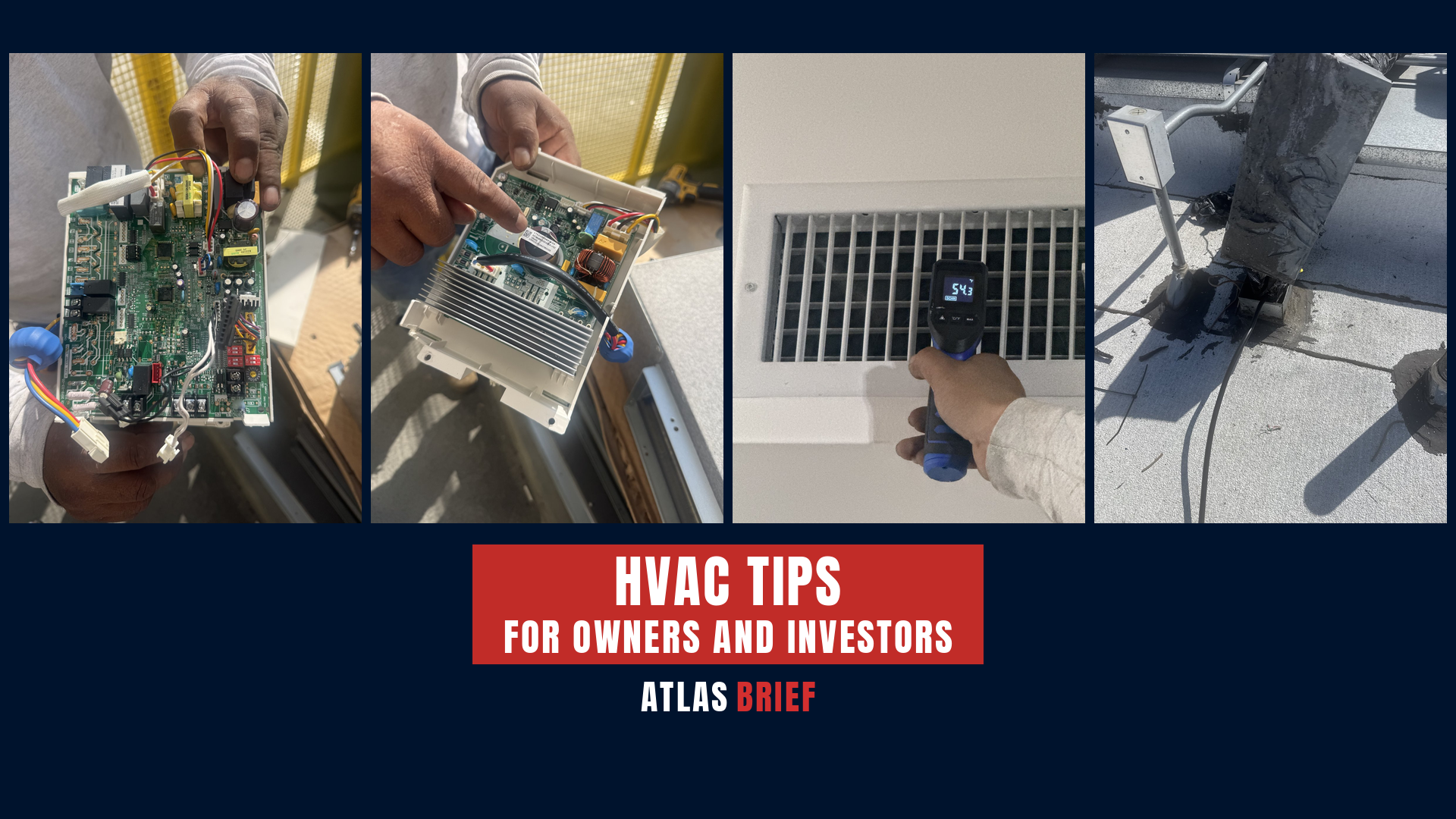
Last week, one of the 12,000 BTU AC systems at one of my apartment buildings showed an E3 error code. E3 means the indoor unit isn't seeing the fan operate the way it expects. It sounded like a simple repair. It wasn't. We spent roughly four hours troubleshooting the system. The service bill was around $750, and we went through several possible causes before getting the system operating correctly.
I learned more about HVAC in those four hours than I expected and the experience has been great as we plan on pivoting into Atlas HVAC in 2027 and servicing the community.
Modern AC Systems Are Basically Computers
I used to think about an AC system pretty simply. There is an indoor unit. There is equipment on the roof. Something breaks, the technician replaces it, and the AC works again. Modern inverter systems are much more complicated. Our indoor units have a blower motor, main control board, separate inverter/drive board, sensors, thermostat controls and other electronics. All of these components have to communicate and operate correctly.
An error pointing toward the fan doesn't necessarily mean, "Replace the fan motor." That's where diagnosis becomes important.
We Started With the Motor
Because E3 indicated an indoor fan-speed problem, the blower motor was one of the first components investigated. Changing the motor didn't solve the problem. We moved through the system and tested other components. Eventually, we learned something valuable about our particular equipment: our 9,000 and 12,000 BTU AC Pro units share the same inverter/drive board. That gave us a known-good component we could use for testing.
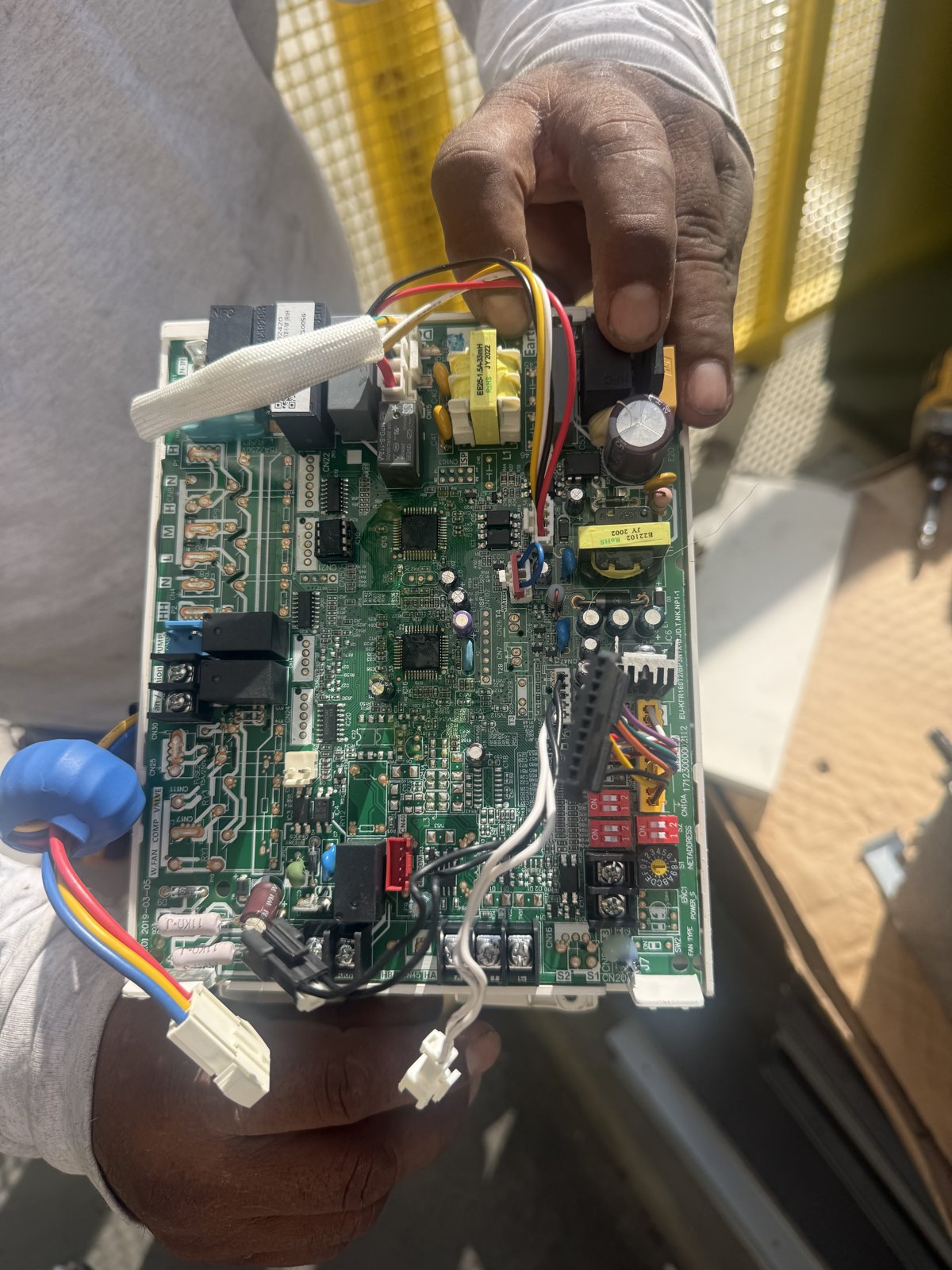
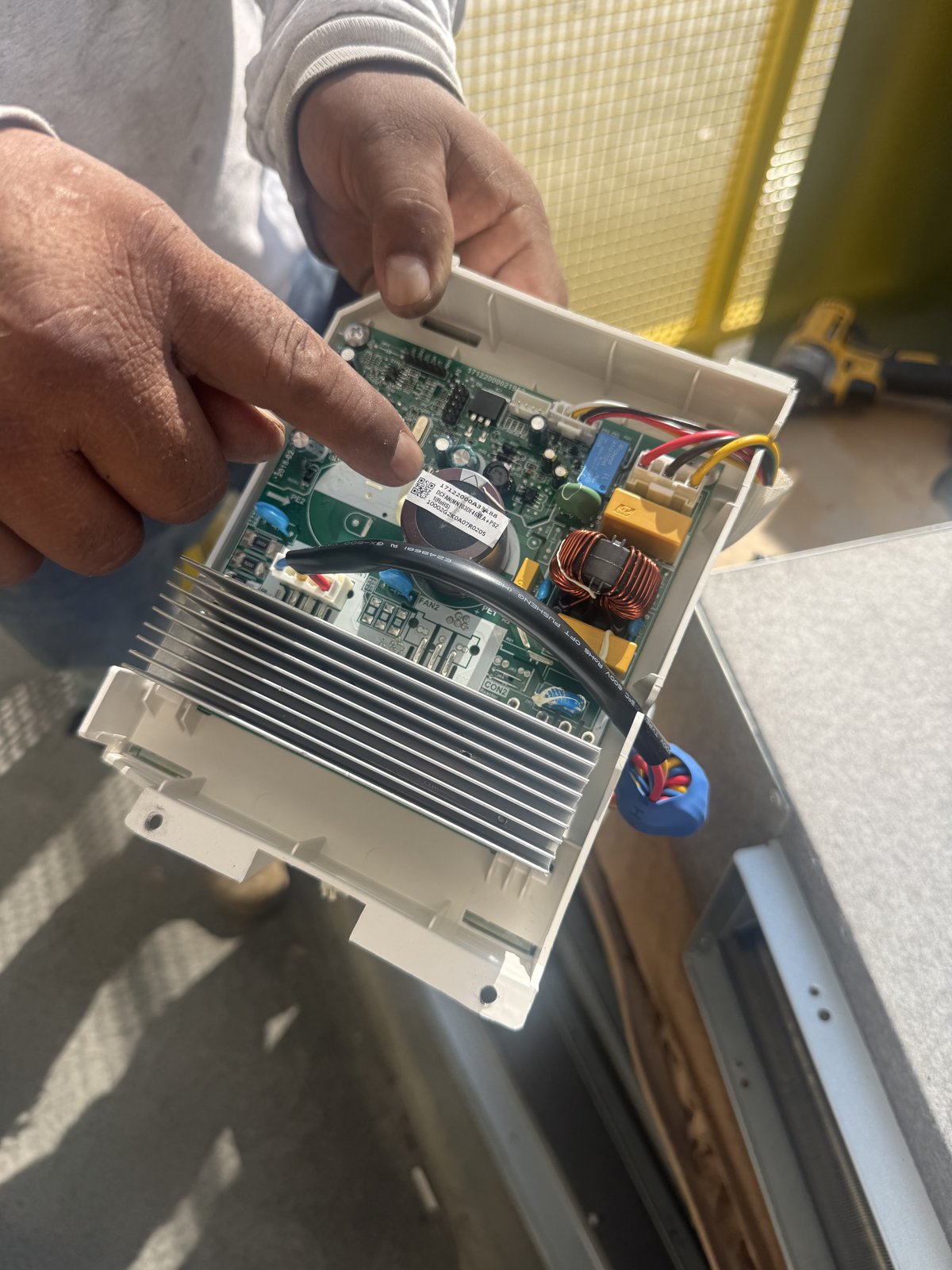
The main control board from one of our indoor units. It looks a lot like the board in our 9,000 BTU units, but it won't swap in. The inverter board. Our 9,000 and 12,000 BTU units share this one, so we had a known good part to test with.
We also learned that some components that look almost identical aren't interchangeable. The 9,000 and 12,000 units, for example, have different main control boards. That is the kind of detail an owner would probably never know until something breaks.
Cold Air Doesn't Always Mean You're Finished
Eventually, we got the system operating and producing air around 55 to 60°F near the register.
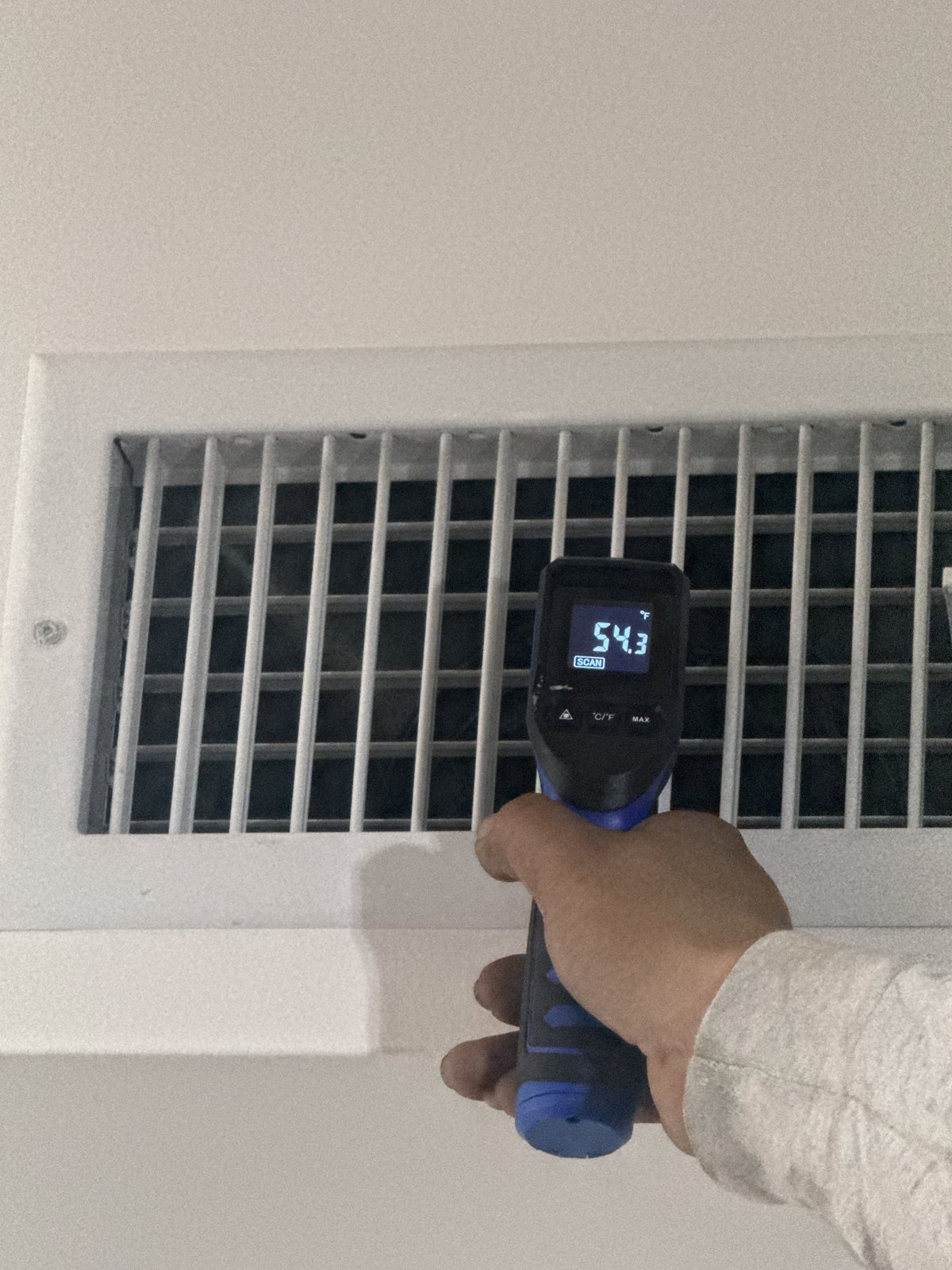
But the airflow still didn't feel right. I walked into another studio with the same 12,000 BTU system and compared them. The difference was obvious. The other apartment was moving substantially more air. That sent us back to the indoor blower system. This was probably my biggest practical lesson from the day: Don't just check whether the air is cold. Check whether the system is moving enough air.
A thermometer can tell you one thing. Standing in another apartment with an identical working system can tell you something else.
The Manufacturer Became an Important Resource
One of the best parts of this experience was working with AC Pro. Their people have been extremely helpful. They helped us identify parts, answered technical questions and confirmed which components work across different equipment sizes. That support matters more than I appreciated before. If you own a lot of apartments, you're going to live with the HVAC equipment you select for years. The purchase price isn't the only consideration.
I would now also ask:
- Can I get parts quickly?
- Does the manufacturer have knowledgeable technical support?
- Will somebody help my technician troubleshoot an unusual problem?
- Will these parts still be available several years from now?
For an owner, that support can be worth a lot.
I'm Building an HVAC Parts Room Now
The experience also changed how I'm approaching inventory. I don't want to wait several days for a relatively inexpensive board while a tenant has no AC. We're now cataloging the systems in the building and keeping selected replacement components on hand. Motors.
Main boards.
Inverter boards.
Thermostats.
And certain other critical components. We're also learning which parts are shared between different models.
The goal isn't to become an HVAC supply house. It's to have enough critical inventory that when a technician correctly diagnoses a problem, the part may already be sitting downstairs.
The Bigger Lesson for Apartment Owners
You don't need to learn how to repair an air conditioner. I certainly don't plan on becoming an HVAC technician. I plan on building Atlas HVAC though. But owners should probably understand their equipment well enough to ask better questions. When someone says a component needs replacement, I now want to know:
What error is the system reporting? What did you test? What failed the test? What's the part number? Do we have one? That's a much better operating system than simply replacing parts until the AC starts working. After owning apartments for years, I'm realizing there is an entire side of real estate that doesn't get discussed enough. Everyone talks about cap rates, rents, interest rates and acquisitions.
Nobody wants to talk about the Tuesday afternoon when an AC stops working and two technicians spend four hours figuring out why.
But if you own buildings, that's real estate too. HVAC is one of the most challenging repairs in the building and I plan on being an expert in this space. If you are having HVAC issues, I'd like to hear from you.
Write to David Safai at David@AtlasBrief.La
Appeared in the Sept. 28, 2026 edition of The Tape.