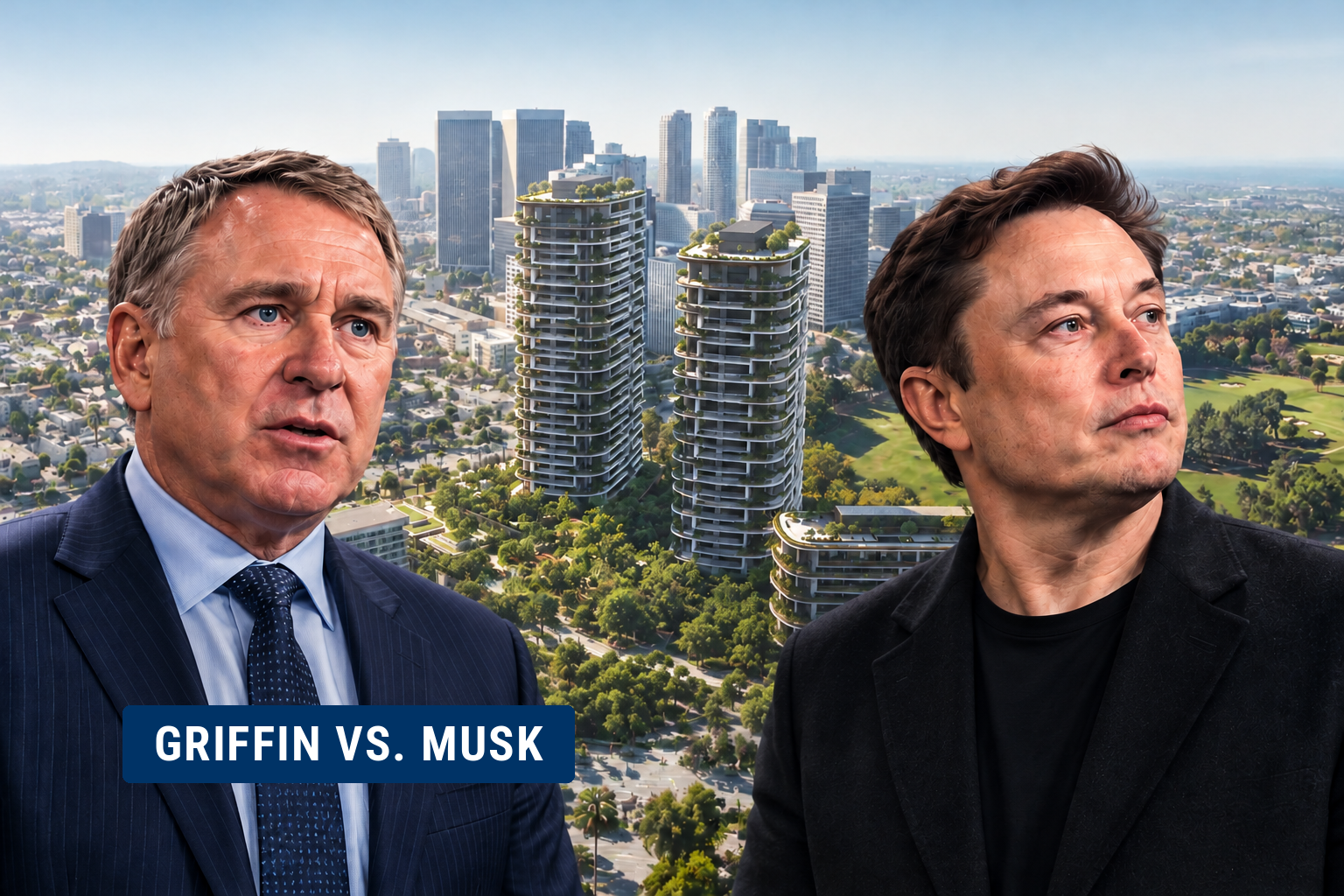
Ken Griffin Sees Inflation. Elon Musk Sees Deflation. I'm Looking for the Opportunity in Between.
I've looked at roughly 5,000 real estate listings. High interest rates may be creating better buying opportunities, but finding a great building at the right price is still harder than people think.
I don't like high interest rates.
I'd much rather see the Fed bring rates back to 2.5% and be able to borrow at 4.5% to 5%.
But I also know what happens when money gets cheap.
More buyers show up. They compete for the same buildings. Prices go up.
So I'm looking for a different opportunity.
Can I buy a great building today at a better price, collect good income, and refinance later if rates come down?
That's what interests me.
But after looking at roughly 5,000 listings, I can tell you something.
Great deals are not just sitting around waiting to be bought.
What I've learned from 5,000 listings
There are plenty of buildings for sale.
Very few interest me.
Some are overpriced. Some need too much work. Some are in locations I don't like.
Others look good until I study the actual income and expenses.
A building might be advertised at a 6.5% cap rate. But after I look at the taxes, insurance, repairs and real expenses, the numbers may tell a different story.
I'm not interested in buying something just because it's cheaper than it was three years ago.
I want a great location, good design, room to improve rents and a price that makes sense.
Finding all of that in one building is difficult.
That's why I keep looking.
Why I like buying at a 6.5% cap instead of a 4.5% cap
Here's a simple example.
A few years ago, investors were buying apartment buildings at 4% cap rates because they could borrow at 3.5%.
Let's say I bought a $10 million building with $5 million down.
At a 4% cap, the property brings in $400,000 a year after normal operating expenses, before loan payments.
At 3.5% interest, my $5 million loan costs $175,000 a year.
That leaves me $225,000.
That's a 4.5% yearly return on my $5 million.
Now look at a possible deal today.
I buy a $10 million building at a 6.5% cap.
It brings in $650,000 a year.
Even with a 6.5% loan, my interest costs $325,000.
That leaves me $325,000.
That's a 6.5% yearly return.
I'm collecting $100,000 more a year, even though my loan costs almost twice as much.
What if rates fall five or ten years from now?
This is where I see the opportunity getting better.
Let's say I buy that building today at a 6.5% cap.
I collect the income and improve the property.
Then five or ten years from now, maybe borrowing rates fall to 4.5%.
If I can refinance my $5 million loan at that rate, my yearly interest falls from $325,000 to $225,000.
That's another $100,000 a year.
If buyers start accepting 5% cap rates again, the same $650,000 in yearly income would support a value of $13 million.
I paid $10 million.
Now it could be worth $13 million.
That's a $3 million increase without assuming any rent growth.
Of course, that may never happen.
Rates could stay high. The property could lose income. Buyers could demand even higher cap rates.
And refinancing has costs.
That's why I want the numbers to work today.
I don't want to buy a bad building and hope lower rates save me.
Ken Griffin sees inflation. I agree with him.
Ken Griffin has been warning that inflation remains a problem and that lower rates may not come as quickly as people expect.
I think he's right about the economy we're dealing with today.
The government is spending heavily.
Construction is expensive.
Labor is expensive.
And now we're spending huge amounts of money building data centers and the power systems needed to run them.
That spending may keep some prices higher for longer.
In October, Chicago Fed President Austan Goolsbee warned that the AI boom was already raising costs beyond the technology industry.
That's interesting to me.
Everyone talks about how technology will make things cheaper.
But right now, building the technology is making some things more expensive.
And that could keep pressure on interest rates.
Elon Musk sees deflation. I think it comes later.
Elon Musk believes robots and new technology could eventually make goods and services much cheaper.
I can see that happening.
But I don't think we're going to see the full effect in three years.
I see it today with the way its replacing a tutor for us at home and I can have ChatGPT tutor my kids better that most tutors and my cost on tutoring is at zero now.
For me that is Deflation.
I have also set up Muse Ai to find clothing sales that come for 50% and driving my cost of clothes down.
It has helped me also make it much faster to design and renovate units.
What Elon Musk is talking about could take 5-10+ years to happen.
Musk recently talked about how difficult it is to build robotic hands that can do basic tasks with the same skill as a person.
Think about that.
Before robots can replace large amounts of physical labor, they need to do ordinary jobs safely and reliably.
Construction.
Repairs.
Plumbing.
Electrical work.
Building maintenance.
I believe technology will eventually change all of these businesses.
But getting from a demonstration to millions of robots working every day is a big step.
Even Griffin has acknowledged how much technology is changing work.
He recently described how Citadel is using AI to complete some difficult tasks in days instead of months.
That's a real change.
But doing work on a computer is different from replacing a plumber, electrician or construction worker.
That's why I think Griffin and Musk could both be right.
Griffin may be right about inflation today. Musk may be right about lower costs much later.
And I'm looking for opportunities while that change takes place.
Here's what interests me about Los Angeles
New apartment buildings are expensive to build.
Land costs more.
Labor costs more.
Materials cost more.
And borrowing is expensive.
In some neighborhoods, it may cost more to build a new apartment building than the finished property would sell for.
Why would someone build under those conditions?
Most developers won't unless the numbers improve.
That could mean fewer new apartments coming to market over the next several years.
And if people still want to live in those neighborhoods, less new housing could help rents grow.
Meanwhile, I may be able to buy an existing building for less than it would cost to build something similar.
I like that.
But I'm not counting on rents going up to make a deal work.
I want the income to make sense today.
I'm only looking for something special
This is where I'm very selective.
I don't want to buy a building just because it has a high cap rate.
I want a great location.
Good design.
Units people actually want to live in.
Rents I can improve.
A building that won't need endless repairs.
And ideally, land with value beyond what's already built.
Sam Altman has made an interesting point about technology.
Many things could become cheaper to produce.
But some things will always be limited.
Land is one of them.
Technology can create more software.
It can help people do more work.
It may even make construction cheaper someday.
But it can't create another acre in Beverly Hills.
It can't create another corner at Beverly and Fairfax.
And it can't create another Malibu coastline.
That doesn't mean I would pay any price for those locations.
The numbers still need to work.
I want something that would be difficult to replace, bought at a price that makes sense.
My Take
I've looked at roughly 5,000 listings.
I'm still looking.
I think that says a lot about this market.
Yes, higher interest rates are creating opportunities.
But finding a truly great deal is still hard.
I think Griffin is right that inflation may stay with us longer than people expect.
I think Musk may eventually be right about technology bringing costs down.
And I would love to see borrowing rates return to 4.5% or 5%.
But I'm not waiting for that to happen.
I'm looking for owners who need to sell.
I'm looking for buildings with good income, great locations and room to improve.
I'm looking for properties that would cost much more to build today.
And I want to buy at a price that works with today's borrowing costs.
If rates stay high, I still want to collect good income.
If rates fall, maybe I can refinance.
If rents grow, that's another benefit.
And if buyers start paying lower cap rates again, the property could be worth more.
But none of those things needs to happen for me to want the building.
I want to buy at a price that works today, with the chance to borrow cheaper tomorrow.
That's the opportunity I'm looking for.