The Great Real Estate Standoff: Buyers Have Cash, Owners Won’t Sell
I ran a simple LinkedIn poll this week asking real estate investors what they're doing right now. The results were interesting.
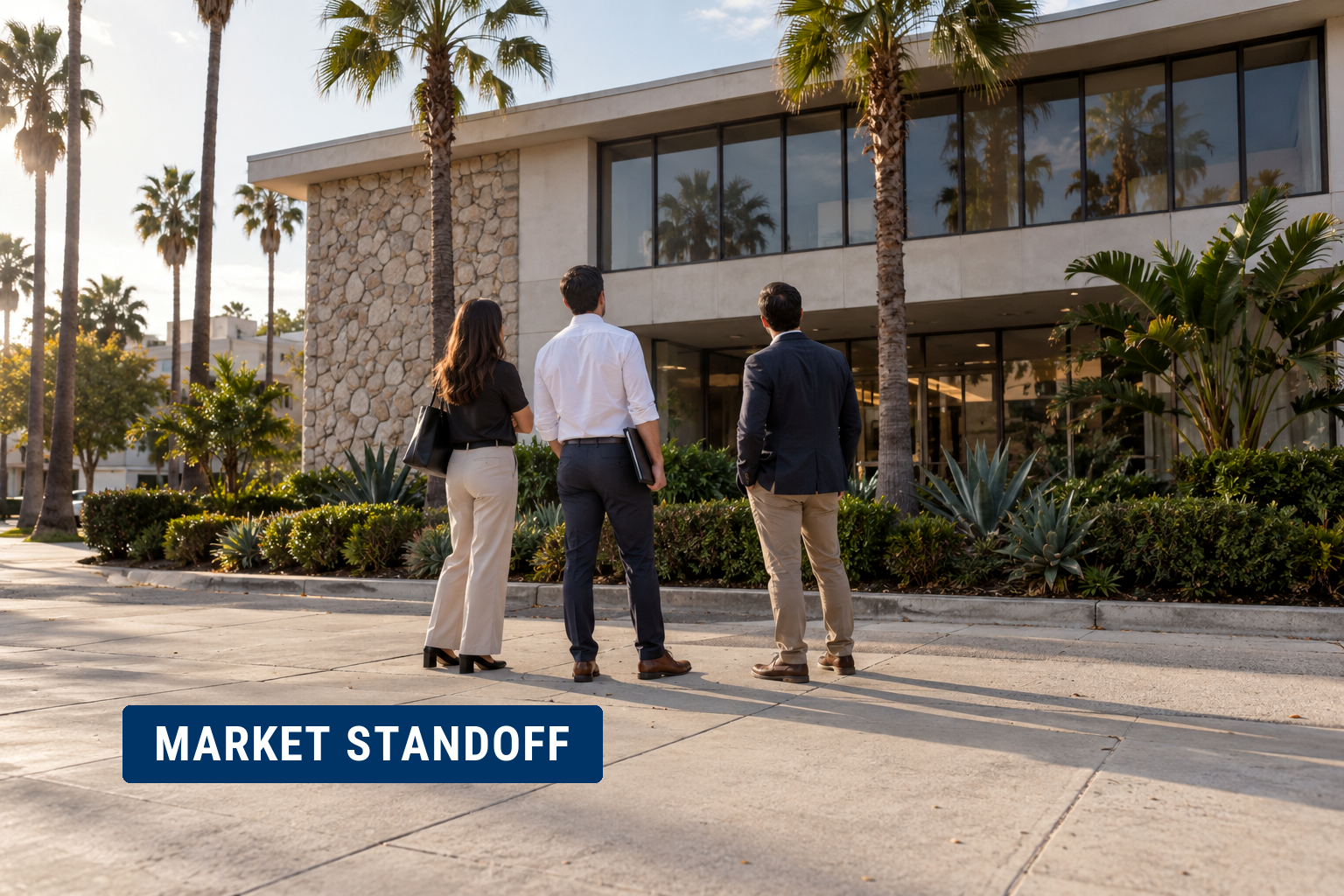
The Great Real Estate Standoff: Buyers Have Cash, Owners Won’t Sell
I ran a simple LinkedIn poll this week asking real estate investors what they're doing right now.
The results caught my attention:
52% are buying.
47% are sitting on the sidelines.
2% are selling.
It's only 60 votes, so this isn't a scientific survey.
There are buyers.
There is money.
What we don't have are many owners who really want to sell.
Where Are the Sellers?
Interest rates have changed the math on almost every commercial real estate deal.
Values have come down. Loans cost more. Refinancing is harder. Buyers need higher returns to make deals work.
There is distress.
There are loan problems.
There are owners who need to sell.
But we haven't seen a wave of forced selling.
Instead, a lot of owners seem to be waiting.
Multifamily: Plenty for Sale, Not Much I Want to Buy
This is where I see the standoff most clearly.
There are apartment buildings on the market. But when I look through what's for sale, a lot of it is older buildings with lots of put off repairs, rule problems, hard tenant situations, or just prices that don't make sense at today's loan rates.
The better buildings are harder to find.
Meanwhile, the apartment market itself hasn't collapsed. Los Angeles apartment vacancy was about 5.5% in Q2 2026, with average asking rents around $2,310 per unit per month.
If the property is full, bringing in cash and the owner doesn't have a loan forcing a decision, why sell into a tough loan market?
That's part of the problem for buyers like me.
The buildings we really want aren't always the ones being offered.
Office: The Price Drop Has Already Been Severe
Office is different.
This is where we've already seen big losses and distressed sales.
Some buildings have sold at big discounts to what they used to be worth. In most cases, that's below what it would cost to build them today.
That's starting to pull in a lot of buyers who want to use the building themselves.
Some are betting the office market comes back someday.
Others are buying for the land or looking at turning buildings into housing or other uses.
But day to day, office is still tough.
Greater Los Angeles office absorption turned negative again in Q2, according to Avison Young. That means more space emptied out than got filled.
Industrial: Looking for the Bottom
Industrial has also gone through a reset.
Los Angeles industrial asking rents were down 8.6% from a year earlier in Q1, while direct vacancy reached 5.9%.
But there are signs that demand is getting better.
Nationally, industrial leasing jumped 49.4% from a year earlier in Q2, while net absorption nearly doubled from the quarter before.
That's why I think industrial is interesting to watch right now.
It got hit.
Rents came down.
Values adjusted.
But demand hasn't disappeared.
We may be getting closer to a bottom.
Retail: Investors Are Still Cautious
Retail is somewhere in between.
Los Angeles retail vacancy reached 5.83% in Q2, its highest level in more than a decade. But sales over the last 12 months reached about $4.9 billion, up more than 40% from a year earlier.
Another market report put average retail cap rates at about 6.2%, up from 6.0% a year earlier.
Deals are happening.
But investors are being picky.
Good locations with strong tenants are one thing.
The Real Issue Is Still Interest Rates
This whole market comes back to the cost of money.
Rates moved up fast, but commercial real estate takes a long time to adjust.
An owner with a low rate loan doesn't have to do anything today.
The real test comes when that loan comes due.
A lot of commercial real estate debt comes due in 2026, and high loan costs keep creating refinancing risk.
That's where I think we need to pay attention.
A building may work with 3% or 4% debt.
The same building can have totally different cash flow when that loan has to be refinanced at 6% or 7%.
Then the owner has a few choices.
Put more cash into the property.
Accept lower cash flow.
Find a new loan.
Or sell.
That's where forced sellers can come from.
So What Breaks the Standoff?
I think there are two basic paths.
If interest rates level off or come down, buyers and sellers may start meeting again.
If rates stay higher for longer, we could see people forced to sell.
More loans come due. More owners face tough refinancing choices.
Some will put more cash into their properties.
Others won't.
That's when we could finally see more forced sellers.
Banks are already starting to lend more on commercial real estate again, but they're still stricter about who qualifies.
What I'm Watching
My little LinkedIn poll isn't going to predict the real estate market.
But 2% saying they're selling is interesting.
Especially when 52% say they’re buying.
There seems to be plenty of money looking for real estate.
There's even more money sitting on the sidelines waiting for the right deal.
The missing piece is good supply. I've seen some great properties bought during this downturn, and some where I wonder why the owner bought garbage.
Right now, owners of good real estate don't seem very interested in selling it.
So I don't think the big question for the rest of 2026 is whether there are buyers.
The question is whether interest rates stay high long enough to finally create the sellers.
I’m researching the market to build better investment plans. I’m sharing what I find along the way with other investors so we can talk, debate and make better decisions.
Follow Atlas Brief on X
Get daily Los Angeles commercial real estate news, deal activity, market data, and development updates.
Write to David Safai at David@AtlasBrief.La
Appeared in the Aug. 24, 2026 edition of The Tape.