The Hidden Advantage Los Angeles Real Estate Investors Have
I wanted to understand what Warren Buffett and Sam Zell meant when they talked about “moats.” The more I studied it, the more I began to think Los Angeles may have one of the biggest real estate moats in America.
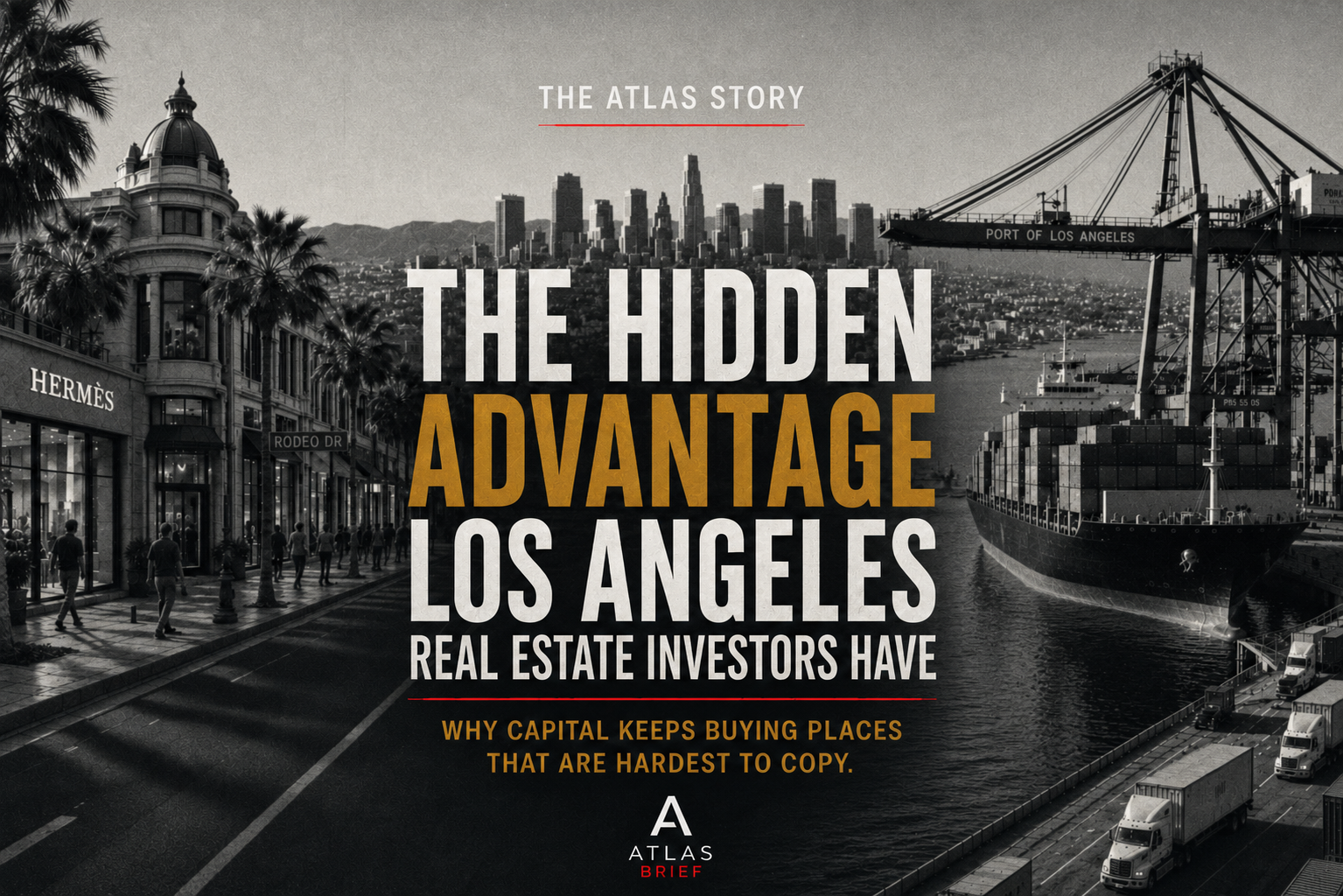
I thought I understood what Warren Buffett meant said about moats.
I didn’t.
Then I wrote an article about Sam Zell and learned that I didn't even understand Real Estate Investing.
After I posted it on LinkedIn, Jay Lybik sent me a message. Jay worked with Sam for almost 20 years. He Said:
“Sam liked to find moats.”
Apartments in Los Angeles and the Bay Area are hard to build more of them. This is a Moat.
Dallas and Houston. There is so much land that they can keep building.
Jay said Sam’s advice today would be:
“Look for value, look for moats and don’t get crazy with debt.”
I had never fully thought about what a moat means in real estate.
Real estate can have moats too just like companies like Apple and Amazon have.
Limited land can be a moat.
The ocean can be a moat.
Strict zoning can be a moat.
A famous street can be a moat.
A port or a group of companies in one area can be a moat.
To me, a real estate moat is anything that makes a property or location hard to copy.
Once I saw it that way, something hit me. Los Angeles may have a huge moat. Not because it is easy to build here. Because it is so hard to Build here!
Could Los Angeles’ Problems Also Be Its Advantage?
Owning real estate in Los Angeles is not easy.
Approvals can take years.
Zoning limits what can be built.
Neighbors fight projects.
Labor, materials and insurance cost more.
Taxes are high.
Rent laws limit some owners.
Measure ULA added a large tax and institutions fled.
These are real problems.
But I started looking at them from the view of someone who already owns a building.
If it takes years to approve a project, it also takes years for someone to compete with you.
If zoning limits new buildings, less supply gets built.
If construction costs are too high, old buildings become harder to replace.
If neighbors fight every project, existing buildings face less competition.
A rule can hurt an owner in one way and protect that owner in another.
Los Angeles is hard, so it must be a bad place to invest.
Maybe being hard is part of the value.
The Money Already Found the Moats:
Beverly Hills.
West Hollywood.
The South Bay.
Culver City.
Retail Averages:
Beverly Hills: $1,855 per square foot
Los Angeles overall: $561 per square foot
Beverly Hills retail was selling for about 3.3 times the Los Angeles median.
The value is in the location.
You can build another store.
You cannot build another Beverly Hills.
Hermès Paid About $16,000 Per Square Foot
Then I found a sale that made me stop and for 3 weeks this one still has my head spinning and changes how I think about Real Estate.
Hermès paid about $400 million for two Rodeo Drive properties totaling around 25,000 square feet.
That comes out to about $16,000 per square foot.
Hermès was not just buying a building.
It was buying Rodeo Drive!
That is what Hermès was paying for.
Hermès could still have paid too much.
But nobody pays $16,000 per square foot because of the walls.
They are paying for Rodeo Drive.
One Beverly Hills Is a Huge Bet
A few blocks away, One Beverly Hills is being built.
The project covers about 17.5 acres near Wilshire and Santa Monica boulevards. It sits beside the Beverly Hilton and Waldorf Astoria Beverly Hills.
It is expected to include Aman Beverly Hills, luxury homes, a hotel, a private club, restaurants, stores and about 10 acres of gardens.
The developers have announced approximately $4.3 billion in financing. At a recent developer meeting, one executive quietly mentioned that Jeff Bezos may be buying there. I’m still working to confirm it, so I’m not ready to publish that as fact.
But I would not be surprised if One Beverly Hills becomes the new gathering place for billionaires.
Nobody puts billions of dollars into an average location.
The developers are selling Beverly Hills, the Aman name, privacy and location.
At their developer meeting about 6 months ago, I heard from their team that Jeff Bezos may be tied to one of the homes.
I have not confirmed it, so I am not treating it as a deal.
In 2020, Bezos paid $165 million for the Warner Estate in Beverly Hills.
Amazon has also made a large bet on Culver City through its entertainment business.
This shows that major capital is still betting on the Region.
The Ports Have Their Own Moat
The Ports of Los Angeles and Long Beach are tied to highways, rail lines, truck routes, warehouses and workers. That system took decades to build. You can’t just recreate this infrastructure.
A company can build a cheaper warehouse farther away. It cannot move the port!
Industrial prices are around this ballpark.
Carson: $262 per square foot
Torrance: $296 per square foot
Compton: $308 per square foot
Douglas Emmett Built a Position
I found a similar pattern in Beverly Hills.
Douglas Emmett purchases totaling around $260 million of Office and Retail.
They appear to control about one-third of Beverly Hills’ Class A medical-office market.
Culver City Is a PowerHouse
Culver City has studios, soundstages, writers, actors, production crews, restaurants, homes and technology companies.
That system took many years to build. You can’t flip your finger and put this in a random place.
Apple is building about 536,000 square feet of new office and production space near 8888 Venice Boulevard.
Based on our earlier research, Apple also had about 128,000 square feet nearby.
Together, that puts its area footprint at roughly 664,000 square feet.
Amazon has made a similar play. 14 acres and totals around 720,000 square feet.
Apple and Amazon want Culver City’s people, studios and business ties.
Call it what you want, I see a Moat Here and the area is thriving. Rents for new One bedrooms are hitting $4000.
Back to what Jay said to me about Zells Strategy.
“Look for value, look for moats and don’t get crazy with debt.”
First, value. Then the moat. Then a safe debt.
A moat cannot save me if I pay too much.
It cannot make an 75%-leveraged deal safe.
It cannot stop a floating interest rate from hurting cash flow.
It cannot help if I do not have enough cash to survive a bad cycle.
The best deal, as I am learning, has four things:
- A property that is hard to replace.
- A low enough price.
- Safe debt.
- Enough cash flow or savings to wait.
The moat protects the property.
The price and debt protect me as the investor.
This has Changed My Thinking
Before this research, I kept asking:
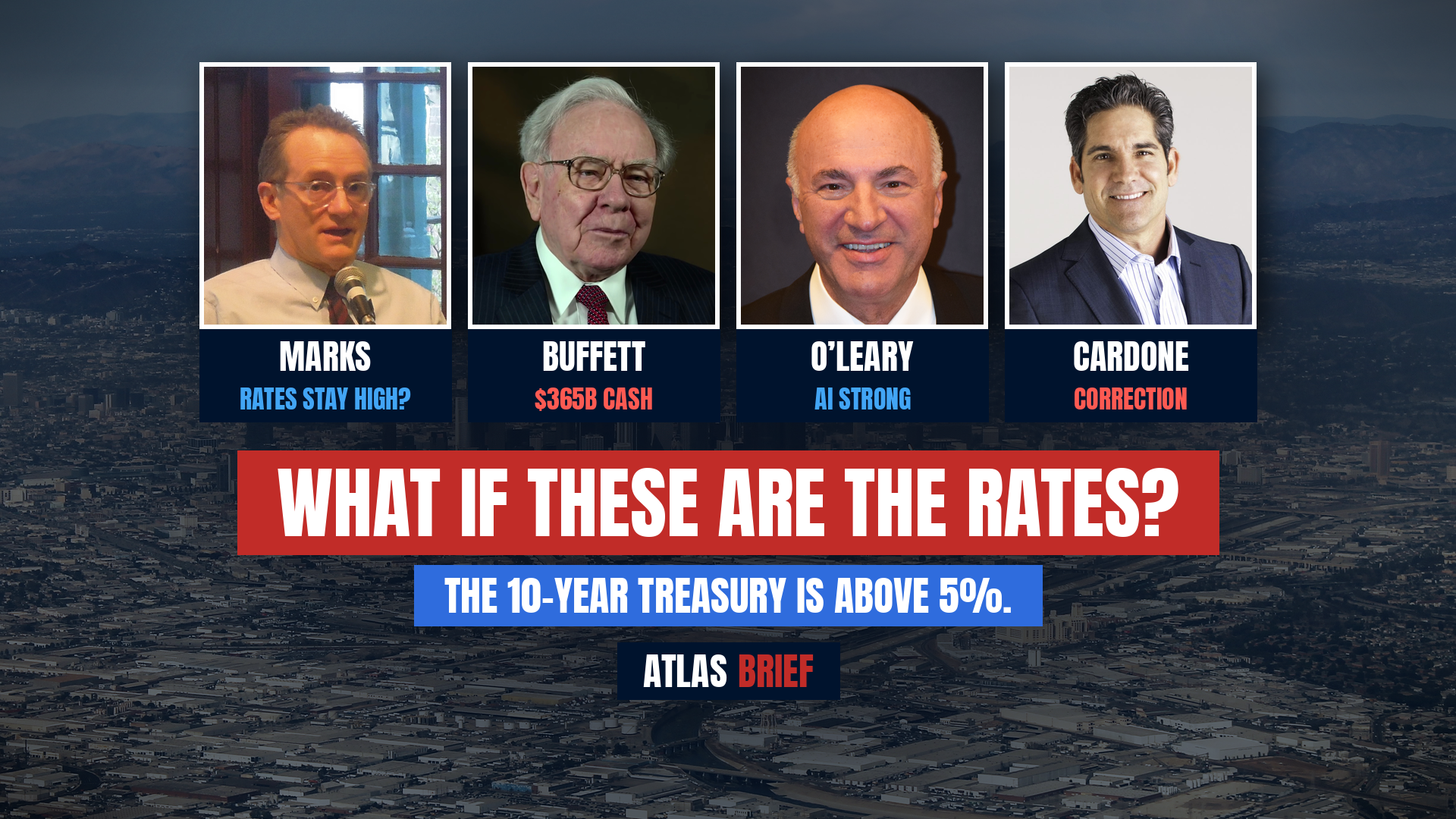
Where are rates going? I still want to know so I have not completely stopped thinking about it.
Has the market hit bottom?
Is Los Angeles getting worse?
Is office dead?
Are people leaving the City?
But now I start with another one:
How hard would it be for someone else to compete with this property?
Can someone build more of it nearby?
Can the building be replaced for what I am paying?
I am not saying I should buy Los Angeles real estate at any price.
Los Angeles may not be easy money.
But the best parts of it may be very hard to copy.
Some of those problems we have also protect what we own. And that might ultimately be a good thing for us investors.
I'm not trying to tell the market what to think. I'm documenting how I research the market before I invest and sharing what I learn along the way.
Follow Atlas Brief on X
Get daily Los Angeles commercial real estate news, deal activity, market data, and development updates.
Write to David Safai at David@AtlasBrief.La
Appeared in the July 30, 2026 edition of The Tape.