Who Are Your Investing Mentors?
"You can't predict. You can prepare." — Howard Marks
“Volatility plus leverage equals dynamite.”
Howard Marks, Co-Founder of Oaktree Capital.
⚠️ This isn't investment advice. It's simply the framework I use to think through investments. I hope it helps you build your own.
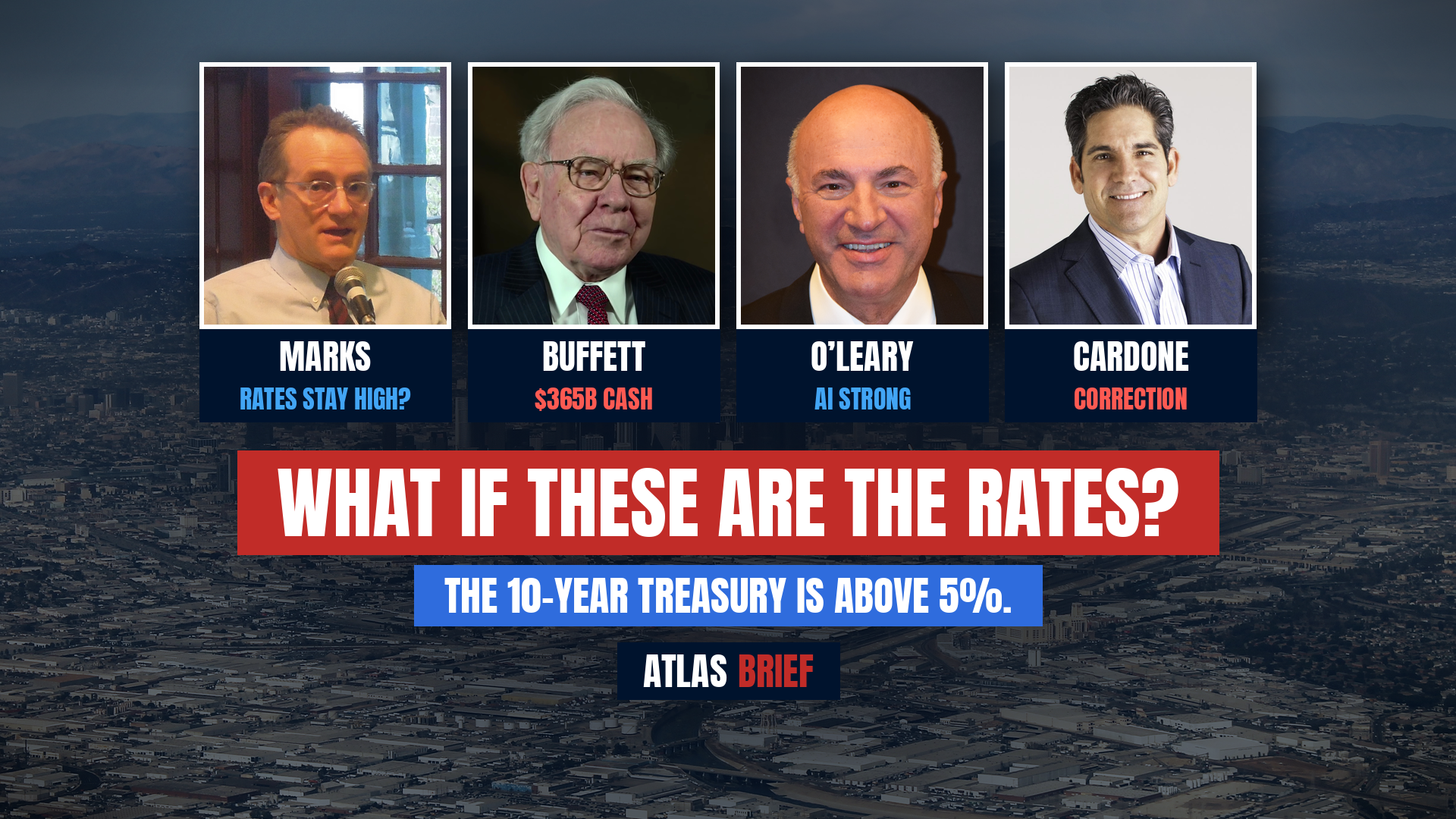
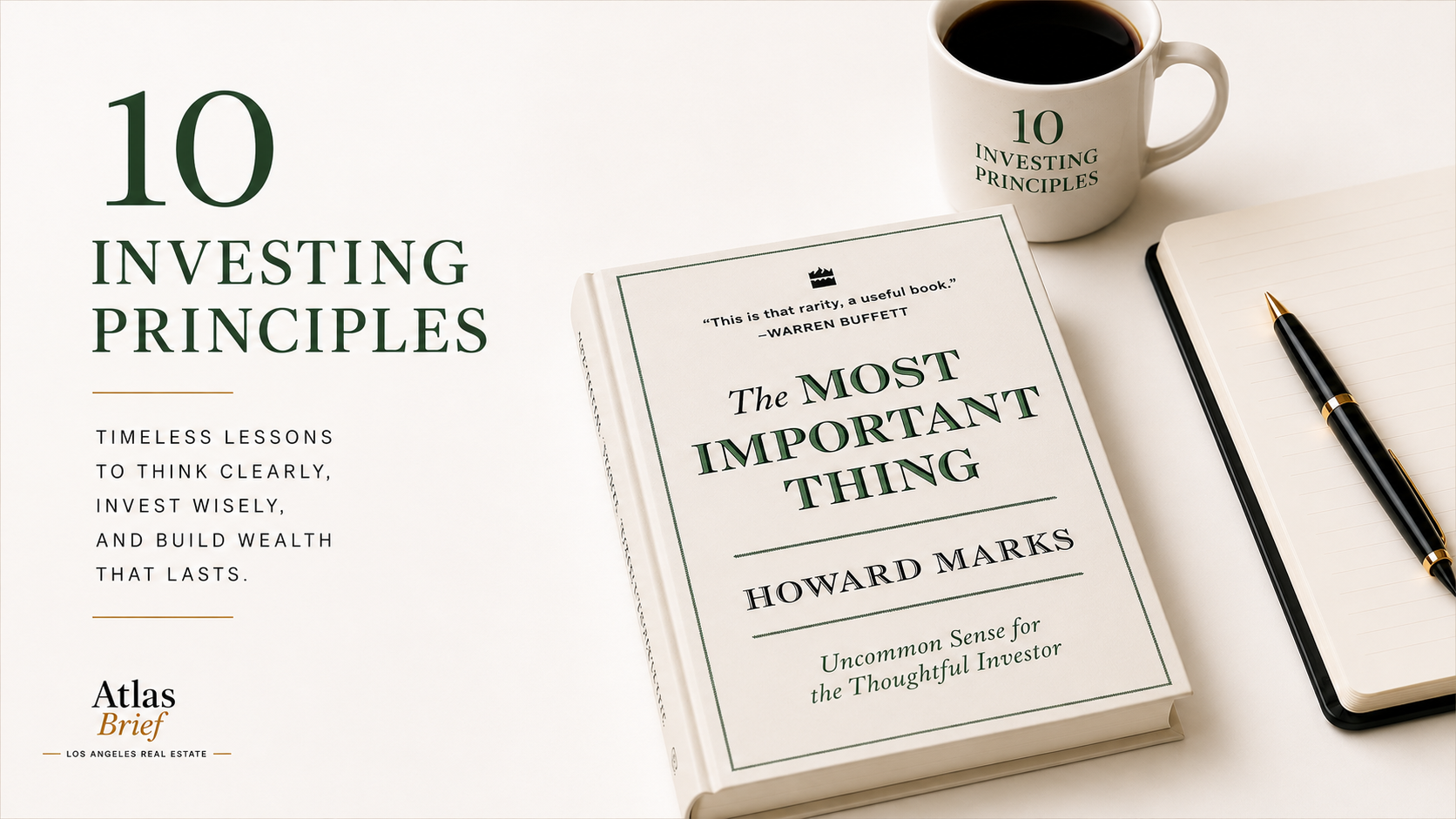
If I had to name one investor who has influenced how I think more than anyone else, it's Howard Marks. Thanks to my friend Jairek who recommended it.
I don't agree with everything Marks says. But every 30 to 60 days I find myself going back and reading his investing memos.
I've recommended The Most Important Thing to dozens of friends. Every one of them has come back with the same response:
"This is one of the best investing books I've ever read."
I don't read Howard Marks because I want to know what the market is going to do.
I read Howard Marks because I want to know how I should think about investing.
To me, that's what great investing is all about.
It's not making perfect predictions.
It's making better decisions.
Today everyone is comparing real estate to the S&P 500.
They're not wrong.
Stocks have significantly outperformed Los Angeles real estate over the past several years, and every real estate investor has felt it. SP500 went up and Real Estate went down.
Some investors are diversified.
Others are 100% real estate.
But Howard Marks reminds me that investing isn't about looking backward.
It's about recognizing where we are in the cycle.
I believe we're getting closer to a point where disciplined, patient real estate investors may begin to find opportunities again.
I've already written about transactions where buyers appeared to create significant equity on Day One simply because they purchased well below replacement cost or what I believed was intrinsic value.
Those opportunities don't happen every year.
But they do happen.
These are the ten Howard Marks principles that continue to shape how I invest in Los Angeles real estate and even how I think about holding cash in T-Bills while I wait.
💬 Who's your investing mentor? I'd love to hear who has influenced the way you think. Share your favorite investor or investing principle in the comments below.
1. Second-Level Thinking
Anyone can spot a good property.
The better question is:
What does everyone else believe... and where could they be wrong?
Everyone thought ED1 development was going to be a home run.
Many developers are now finding out it wasn't that simple.
The question isn't whether ED1 was good or bad.
The better question is:
What is the market getting wrong today?
That's usually where opportunities begin.
2. Market Efficiency (and Mispricing)
Most of the time, markets get it right.
Sometimes they don't.
Those moments don't come around often.
When they do, you have to be ready.
In 2008, that meant buying when everyone else was selling.
Today, I'm looking for assets that I believe have the potential to produce attractive long-term returns because they're purchased at the right price—not because I'm counting on appreciation.
3. Price vs. Value
I love great real estate.
I love buying it below its value even more.
A great property doesn't automatically make a great investment.
The price you pay determines your margin of safety.
The lower your basis, the more room you have if things don't go as planned.
4. Understanding Risk
Most investors spend their time calculating returns.
I spend more time asking what I learned from Keith Cunningham, the author of the book "The Road Less Stupid"
- What's the downside?
- What could go wrong?
- Can I live with that downside?
If I can't sleep at night because of a deal...
It's probably the wrong deal for me.
5. Controlling Risk
This is where I think Howard Marks and Warren Buffett completely agree.
Leverage builds wealth.
Too much leverage destroys it.
One bad investment can erase years of hard work.
I'd rather miss a deal than force one.
Never force a deal.
As Buffett famously says:
Rule No. 1: Don't lose money.
Rule No. 2: Never forget Rule No. 1.
6. The Pendulum
Markets always swing.
Optimism turns into pessimism.
Pessimism eventually turns back into optimism.
A few years ago many people believed Los Angeles apartments could only go up.
Today, many believe they'll never recover.
History suggests the truth is usually somewhere in between.
The hardest part isn't predicting the pendulum.
It's having the patience to wait for it.
7. Finding Bargains
Everyone wants a great building.
I want a great building...
...in a great location...
...at a great price.
Those aren't always the same thing.
The purchase price often determines the investment outcome more than the property itself.
8. Patient Opportunism
Some of my best investments happened because I waited.
Cash isn't just cash.
It gives you options.
Right now, I'm comfortable being patient if it means that I don't make another acquisition for another 2-3 years. Or even to use cash to pay down debt.
9. Avoiding the Herd
If everyone loves the market...
I become more cautious.
If everyone hates a market... which they do now
I start paying attention.
A lot of people dislike Los Angeles real estate today and real estate acquisitions.
I'm not rushing into anything.
I'm watching and gathering data, studying the comps to see where the money is flowing.
10. Controlling Emotions
Investing isn't just numbers.
It's psychology.
Fear.
Greed.
Envy.
Jealousy.
Every market cycle is driven by human behavior.
The best investors keep emotions from making their decisions and this is another skillset I thrive to practice even more of in todays market.
What I've Learned
The longer I invest...
I care about probabilities.
I care about protecting my downside.
I care about buying with a margin of safety.
I care about controlling risk.
I care about staying patient until the right opportunity appears.
Howard Marks gave me a framework.
Warren Buffett reinforced it.
I don't know where Los Angeles real estate will be next year.
I don't know where interest rates are headed.
I don't know how AI will ultimately reshape cities.
But I do believe this:
Markets eventually create opportunities for disciplined investors.
My job isn't to predict when.
My job is to be prepared.
"You can't predict. You can prepare." — Howard Marks
I track every commercial real estate sale in Los Angeles because I'm trying to become a better investor—not just find the next deal.
I'm gathering the data.
Looking deeper into the market.
And patiently waiting.
One Last Thought
Writing this article reminded me why I keep coming back to Howard Marks.
Sometimes the biggest value in writing is reinforcing the ideas you already believe.
Just putting these principles on paper has already sparked new ideas, challenged a few ideas, and reminded me to stay patient.
Markets change.
Opportunities change.
But a good investing philosophy lasts a lifetime.
💬 If this article made you think, I'd love to hear who's influenced your investing. Drop a comment below. That's how we all become better investors.
The opinions expressed here are my own and are intended for educational discussion only. They are not investment, legal, or tax advice. Every investment involves risk, and you should perform your own due diligence before making investment decisions.
If you found this useful, please share it with someone who would enjoy it.
📩 OMs: David@AtlasBrief.LA
Connect with me on LinkedIn:
https://www.linkedin.com/in/david-safai/
Atlas Tax Dispute - I'm working with a few AI experts to build a platform that helps California property owners identify opportunities to reduce their property tax assessments. The goal is simple: combine technology, public records, and tax expertise to help owners determine whether they're overassessed and guide them through the appeal process. If you're paying more property tax than you should, we want to help change that.
Write to David Safai at David@AtlasBrief.La
Appeared in the July 7, 2026 edition of The Tape.