Kevin O'Leary puts About 1/3rd of his Money in Real Estate.
His mother taught him the system.
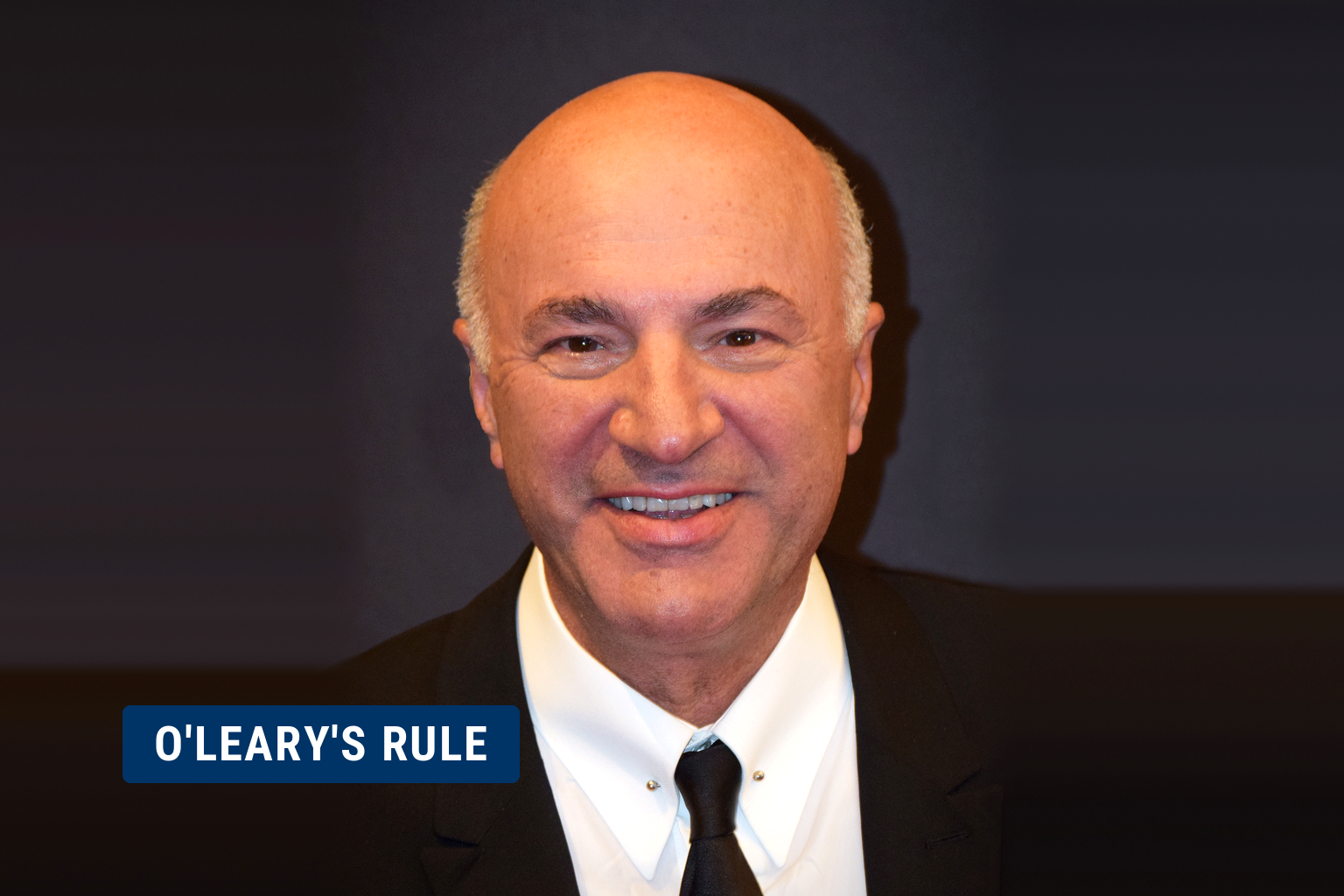
Kevin O'Leary spreads his money across every type of investment he can find.
He breaks his own rule for just one.
Real estate.
About a third of everything he owns.
He has put the number around 31 percent.
That surprised me.
This is the Shark Tank investor most obsessed with spreading out his bets.
His whole brand is never bet big on one thing.
Then he puts a third of his wealth in one type of investment.
Here's why he can.
His mother taught him the system.
She ran a secret portfolio for 55 years.
Nobody knew.
Not even her husbands.
Her rules were simple.
Never more than 5 percent in any one stock.
Never more than 20 percent in any one sector.
Never touch the principal.
Live off the dividends only.
He found the folder after she died.
He says her returns beat any hedge fund he ever met.
Notice what's missing from her system.
Debt.
There is none.
O'Leary runs his real estate the same way.
Low debt.
That is the whole trick.
Real estate at a third of your wealth with low debt is safe.
Real estate at a tenth of your wealth with 75 percent borrowed at a floating rate is a bomb.
The property was never the risk.
The debt was.
Here's the proof.
In 2023, the same O'Leary went on TV and warned that commercial real estate would crack the regional banks.
He pointed at a wall of loans coming due.
Wall Street guesses at the time put that wall around $1.5 trillion.
Morgan Stanley said prices could fall as much as 40 percent.
Those were 2023 numbers.
O'Leary's own line was sharper.
He said up to 40 percent of some regional banks' loans were commercial real estate.
So the man with a third of his money in real estate predicted the real estate debt crisis.
He bets on the property.
He bets against the debt.
Now listen to what he says about rates.
Someone asked him if rates will ever go below 5 percent again.
His answer: "No. No, I don't."
He said the days of free money are over.
He said that for 40 years, a 7 percent mortgage was normal.
His exact word for the 3.5 percent era: an aberration. In plain words, not normal.
I think he's right.
Rates aren't high.
They're normal.
What wasn't normal was the fifteen years that trained us to think 4 percent is a crisis.
Look at this month.
The 10-year Treasury touched about 4.75 percent last week.
A 20 month high.
It closed August 25 at 4.64 percent.
The 30-year sat at 5.27 percent on August 21.
It closed August 25 at 5.17 percent.
The yields came off the high.
The 30-year mortgage is 6.65 percent.
That's Freddie Mac as of August 20.
The July Fed minutes showed three voters wanted a hike.
Nobody voted to cut.
After the weak jobs report, the market is still betting hold, not cut.
And here's the part almost nobody caught.
On August 19, the Treasury doubled its long bond buybacks.
From $2 billion per round to at least $4 billion.
September 9 through November 4.
They said it was to keep the market running smoothly, not to cap yields.
When the government has to buy back more of its own long debt after yields jump, I think the market is still telling you something.
Why are yields rising?
Three reasons showed up in August.
Record government deficits.
Inflation that won't go away.
And a flood of new AI debt.
Morgan Stanley put 2026 investment grade bond sales by the biggest tech cloud companies (the hyperscalers) around $130 to $150 billion.
That debt now sits in the same market as everybody else’s refinance.
Every dollar that buys an AI bond is a dollar that didn't buy the bond that funds your loan.
O'Leary saw this too.
He says mortgages aren't priced off the Fed.
They're priced off the 5-year and the 10-year Treasury.
And bond buyers worried about inflation and deficits set those yields.
The Fed cut.
Mortgages didn't move.
The Fed cannot save us this time.
So the popular plan, survive until the cuts arrive, isn't a plan.
It's a prayer.
So what do I actually do as an owner?
Hold cash. Pay down debt. Buy if it's cheap enough and the risk is low.
The sellers have not shown up yet.
They show up when their loans come due and the math fails.
That day is getting closer.
I lived this once.
From 2009 to 2014, I bought buildings from people who were forced to sell at lower prices. They couldn't refinance their debt, or they were just burnt out.
O’Leary follows one more rule worth stealing.
Never let the payment eat more than a third of your after tax cash.
Low debt.
Long holds.
Buy what's hard to replace.
I’m researching the market to build better investment plans. I’m sharing what I find along the way with other investors so we can talk, debate and make better decisions.
Follow Atlas Brief on X
Get daily Los Angeles commercial real estate news, deal activity, market data and development updates.
Write to David Safai at David@AtlasBrief.La
Appeared in the Aug. 26, 2026 edition of The Tape.